This discovery project explored the redesign possibilities for a customer relationship management (CRM) platform, focusing on usability enhancements, feature development, and visual modernization. The goal was to conceptualize how a complex business tool could become more intuitive while maintaining its robust functionality.
The Challenge
Many CRM systems suffer from feature bloat and complicated interfaces that overwhelm users. This exploration aimed to reimagine how a CRM could balance power with simplicity through thoughtful UX decisions.
Research & Discovery
I began by studying common pain points in existing CRM solutions and identifying opportunities for improvement in:
Navigation complexity
Information prioritization
Customization limitations
Mobile accessibility
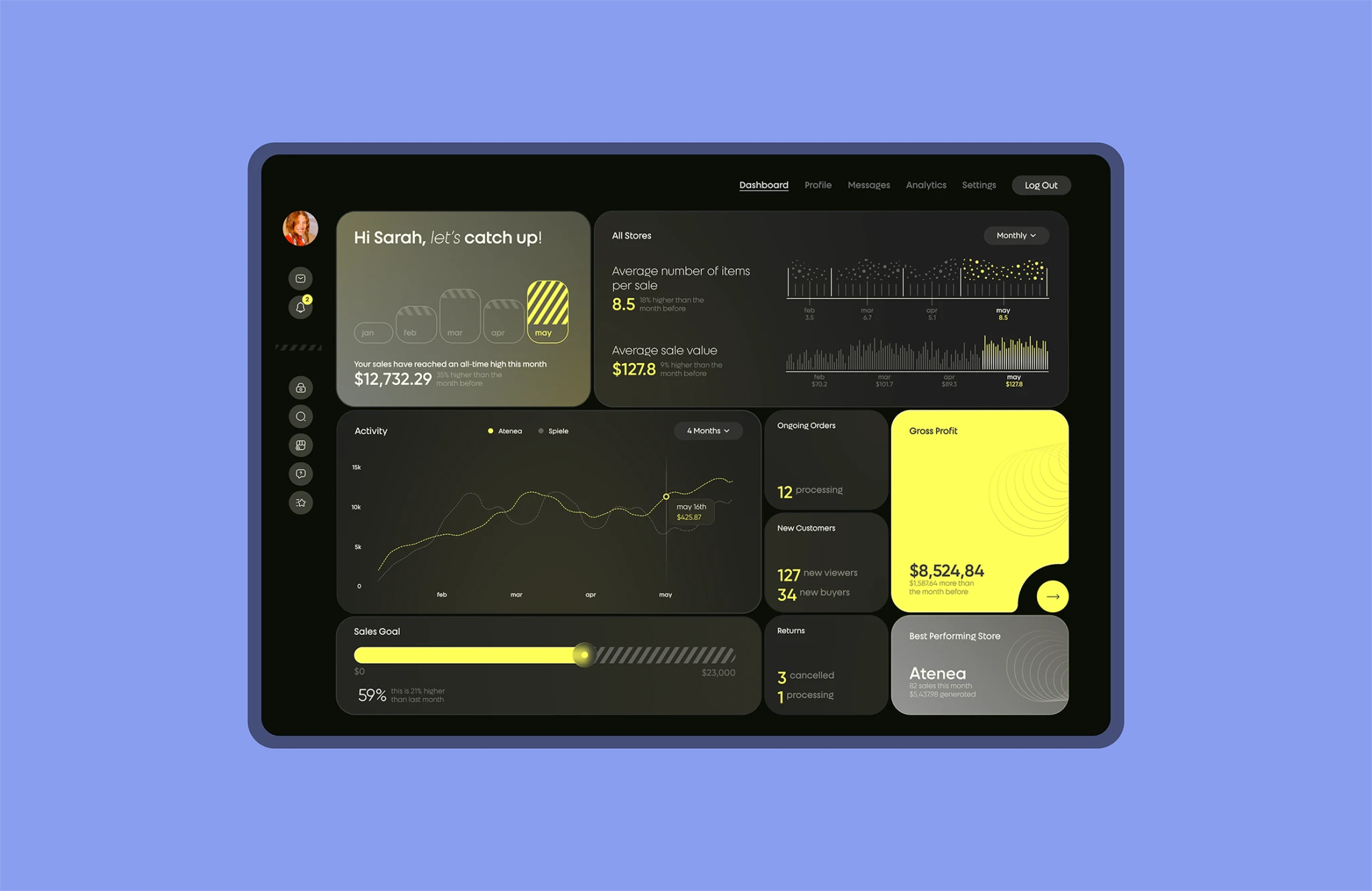
Modular Dashboard
Explored a fully customizable approach allowing users to monitor business metrics through templates or third-party integrations
Conceptualized period-based data visualization with summary and detailed views
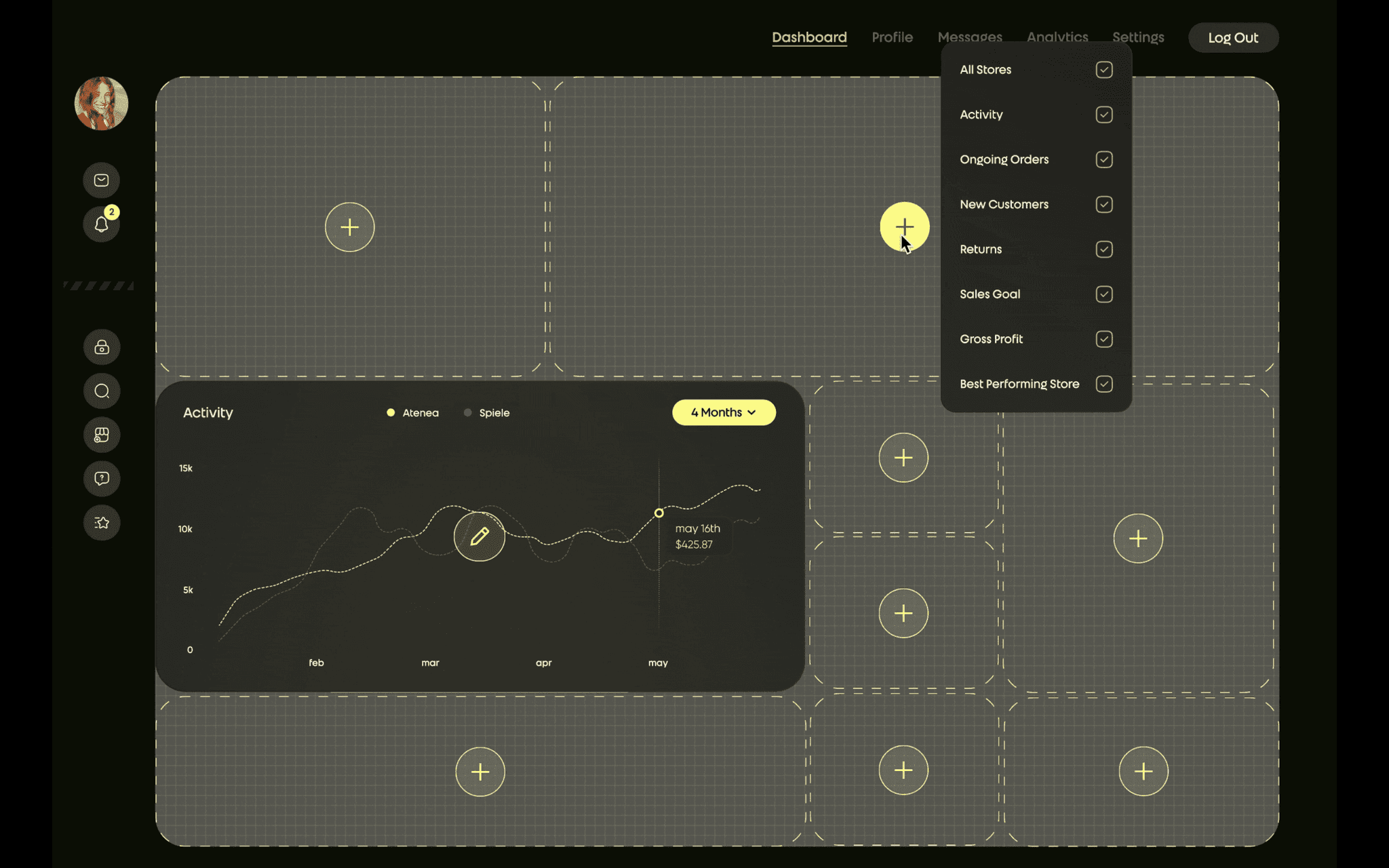
Customization Framework
Developed a modular design system where functionality blocks could be added, removed, or rearranged
Created sample user flows showing how customization might work in practice
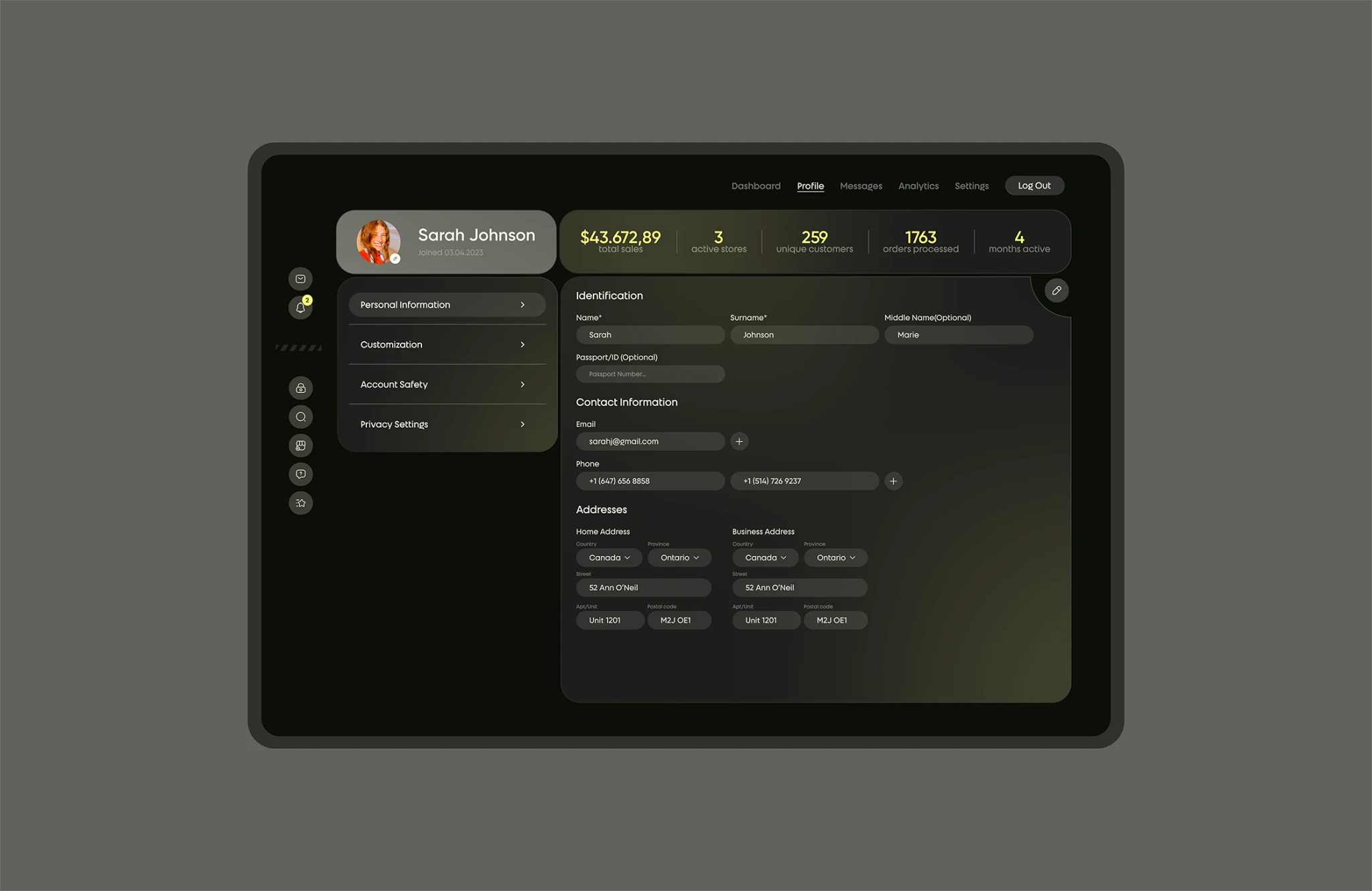
User-Centric Security
Designed a streamlined profile section that balanced ease of use with security considerations
Explored visual cues to reinforce data protection and build user trust
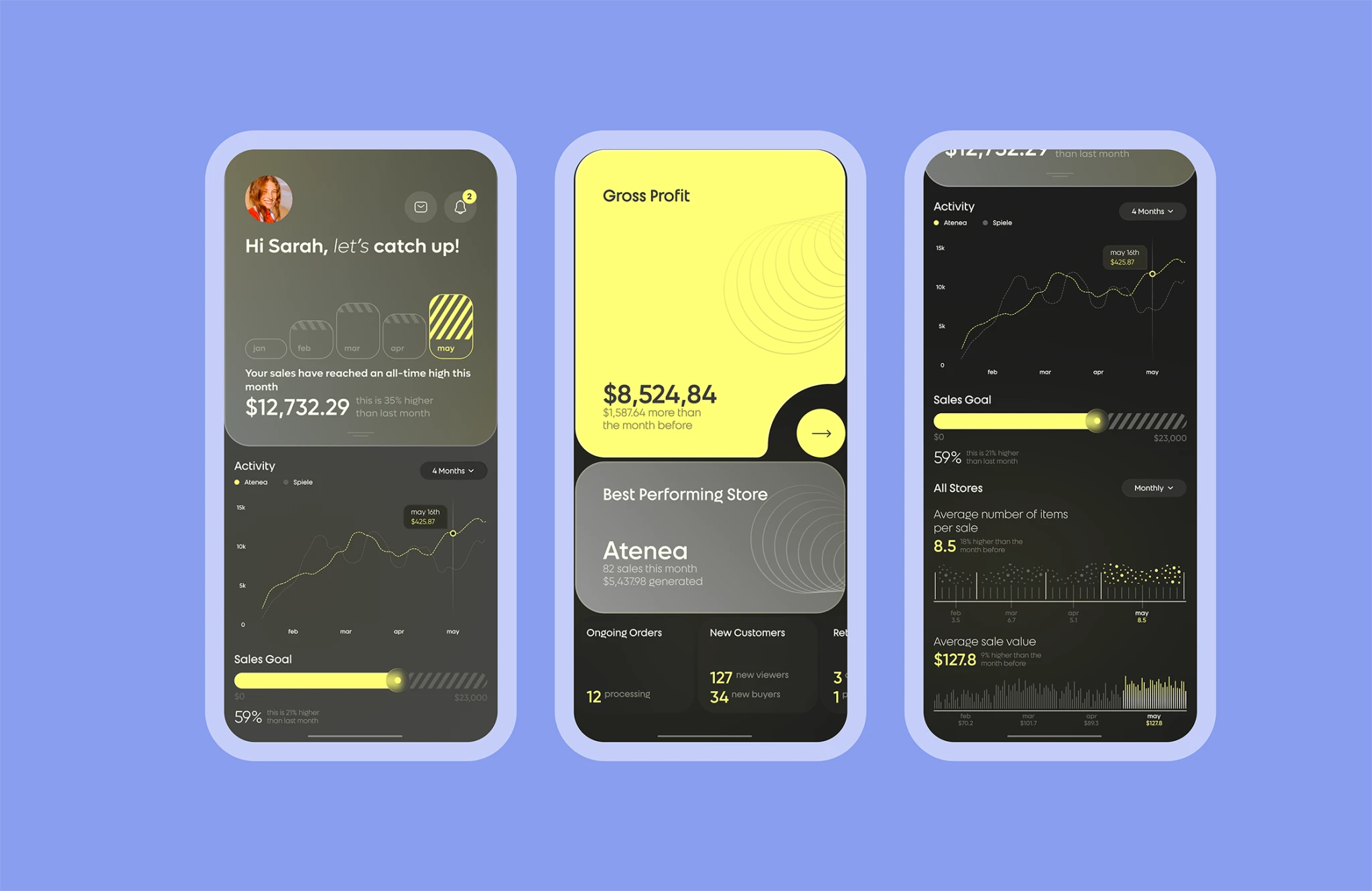
Responsive Adaptation
Conceptualized how complex dashboard information could translate to mobile experiences
Focused on maintaining visual consistency while optimizing for touch interfaces
This exploration yielded several valuable insights about CRM design:
Customization paradox
Users want flexibility but become overwhelmed by too many options
Context switching
Switching between desktop and mobile requires thoughtful consistency in core elements